
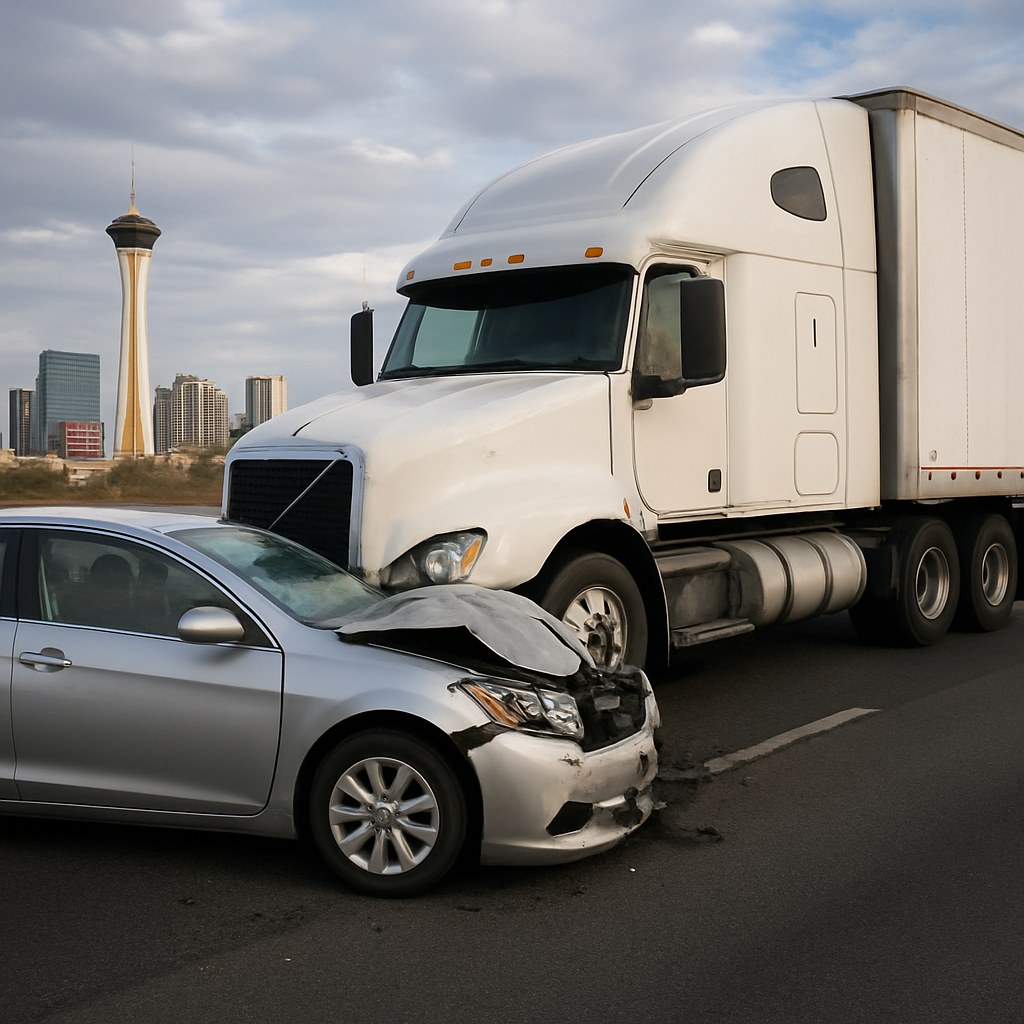
If you were hurt in a crash with an 18-wheeler, delivery van, or company truck, you already know it is nothing like a fender bender. These vehicles are huge, and the injuries are often severe. The legal side is different too. Truck and commercial vehicle accident cases in Las Vegas, Henderson, and across Clark County involve more rules, more evidence, and more people who may share the blame. Here is what makes these cases different, in plain English.
Why Truck Accidents Happen So Often Here
Southern Nevada is a crossroads. Trucks move goods along I-15, US-95, and I-215 every day, carrying freight to the Strip, Henderson warehouses, and points across the Southwest. Delivery vans, box trucks, and company vehicles fill our streets too. More big vehicles on busy roads means more chances for a serious crash.
A fully loaded tractor-trailer can weigh up to 80,000 pounds. A passenger car weighs about 4,000. When they collide, the people in the smaller vehicle usually take the worst of it.
Federal Rules Apply to Trucking Companies
Commercial trucks are not held only to the usual rules of the road. The Federal Motor Carrier Safety Administration (FMCSA) sets strict standards for trucking companies and drivers, including:
- Hours of service: Limits on how long a driver can drive before resting, to prevent fatigue.
- Driver qualifications: Commercial licenses, medical certification, and background checks.
- Vehicle maintenance: Required inspections and repairs for brakes, tires, lights, and more.
- Drug and alcohol testing: Required testing for commercial drivers.
- Cargo and weight rules: Loads must be properly secured and within legal limits.
When a company or driver breaks these rules, it can be strong evidence of negligence in your case.
More Than One Party May Be Responsible
In a regular car accident, the at-fault driver is usually the main target. In a trucking case, responsibility can reach further. Depending on what happened, these parties may be liable:
- The truck driver
- The trucking company that employs the driver
- A company that loaded the cargo improperly
- A maintenance or repair shop
- The truck or parts manufacturer, if a defect played a role
- A company that hired the driver without proper screening
Commercial carriers also carry larger insurance policies than most individual drivers. That can matter when injuries are serious and the medical bills are high. It also means you are likely facing a well-prepared insurance company and legal team from day one.
The Evidence Can Disappear Fast
Trucking companies often send investigators to the scene quickly. Meanwhile, important evidence may be lost or overwritten if no one acts. Key sources include:
- Black box data (event data recorder): Records speed, braking, and other details just before the crash.
- Electronic logging devices: Show how many hours the driver had been on the road.
- Driver logs and dispatch records: Reveal schedule pressure or violations.
- Maintenance and inspection records: Show whether the truck was kept in safe condition.
- Dashcam and traffic camera video: May capture exactly what happened.
- Drug and alcohol test results: Required after certain crashes.
Companies are not required to keep all of this forever. An attorney can send a preservation letter, which formally demands that the company hold on to the evidence.
Injuries Are Often More Serious
Truck crashes frequently cause life-changing injuries, such as spinal cord damage, traumatic brain injuries, broken bones, and internal injuries. Recovery can take months or years. Your claim may include:
- Current and future medical bills
- Lost wages and reduced ability to earn income
- Pain and suffering
- Property damage
- Loss of enjoyment of life
Because the stakes are higher, it is important not to rush into a quick settlement. Early offers rarely account for long-term care.
What To Do After a Truck or Commercial Vehicle Accident
- Call 911 and get medical care. Your health comes first, even if you feel okay.
- Take photos and video of the scene, vehicles, company name, DOT number, and license plates.
- Get witness names and contact information.
- Do not give a recorded statement to the trucking company's insurer.
- Do not sign anything or accept a settlement offer before talking to a lawyer.
- Contact an attorney quickly so critical evidence can be preserved.
Nevada also has a time limit for filing an injury claim, so waiting can put your rights at risk.
You Do Not Have to Face a Trucking Company Alone
Big carriers have teams whose job is to limit what they pay. You deserve someone on your side who will handle the insurance companies and the paperwork while you focus on healing. At Cap & Kudler, our attorneys personally manage every aspect of your case. We speak plainly, answer your questions, and fight for the full and fair recovery you deserve.
The information provided is for general informational purposes only and does not constitute legal advice.
If you or a loved one has been injured in a truck or commercial vehicle accident in Southern Nevada, call the personal injury lawyers at Cap & Kudler for a free consultation with an attorney. Call us at (702) 878-8778 or visit lasvegaspersonalinjuryexperts.com.
Injured in an Accident? We Can Help.
Call Cap & Kudler for a free consultation. Our attorneys personally handle every case and fight to get you the compensation you deserve.
(702) 878-8778