
When you're hurt in a car crash, the bills are easy to count: the ER visit, the physical therapy, the days of missed work. But what about the sleepless nights, the constant ache, or the fear you feel every time you get behind the wheel? Those losses are real, too. In Nevada, the law calls them "pain and suffering," and you may be able to recover compensation for them.
If you were hurt in a crash in Las Vegas, Henderson, or anywhere in Clark County, here is what you should know.
What Is "Pain and Suffering"?
Pain and suffering is the legal term for the personal, non-financial harm an accident causes. Lawyers call these "non-economic damages." Unlike a medical bill, there's no receipt for them, but they affect your daily life every bit as much. For a deeper look, see our guide on suing for pain and suffering in Nevada and our article What is Pain & Suffering in a Personal Injury Case.
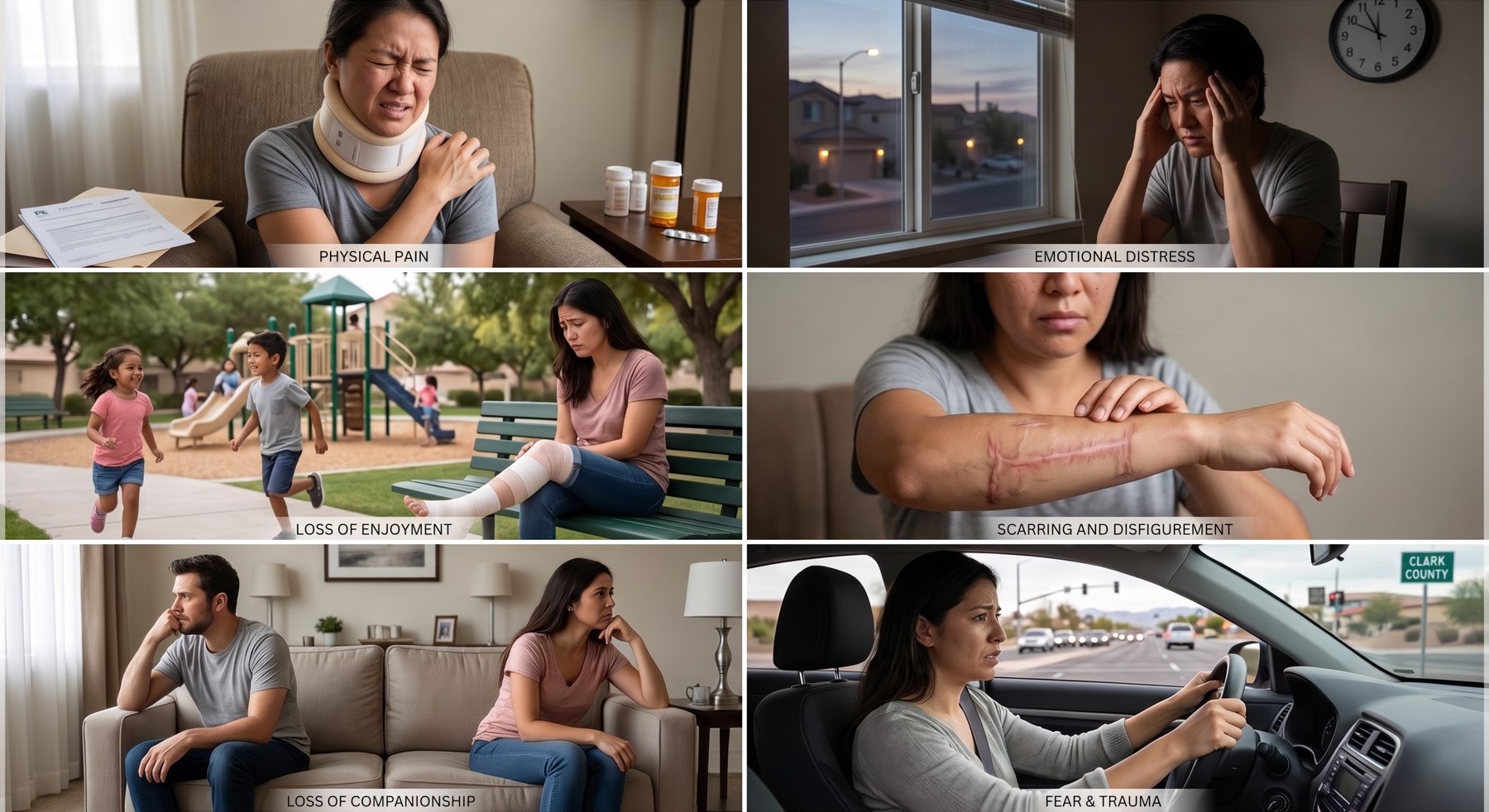
Pain and suffering can include:
- Physical pain from your injuries, both now and in the future
- Emotional distress, such as anxiety, depression, or trouble sleeping
- Loss of enjoyment of life, like no longer being able to play with your kids, exercise, or enjoy hobbies
- Scarring or disfigurement
- Loss of companionship or strain on your relationships
- Fear and trauma, including a lasting fear of driving after a Southern Nevada collision
Can You Really "Sue" for It in Nevada?
Yes. Nevada allows injured people to seek compensation for pain and suffering when another driver's negligence caused the crash. Most of the time, this is handled by making a claim against the at-fault driver's insurance company. Many cases settle without ever going to court. If the insurance company won't offer a fair amount, filing a lawsuit in Clark County may be the next step.
Nevada follows a "modified comparative negligence" rule. That means you can still recover money if you were partly at fault, as long as you were not more than 50% to blame. Your compensation is reduced by your percentage of fault.
What If the Other Driver Has No Insurance?
Pain and suffering doesn't disappear just because the at-fault driver is uninsured or doesn't carry enough coverage. If you have uninsured/underinsured motorist (UM/UIM) coverage on your own policy, it can pay for your general damages, including pain and suffering, along with medical bills and lost wages. Learn more in our article on Uninsured / Underinsured Motorist Coverage, our page on being hit by an uninsured driver in Las Vegas, and our Guide to Nevada Car Insurance Laws.
How Does Nevada Calculate Pain and Suffering?
Here's the honest answer: there is no single formula written into Nevada law. Because these damages are personal, a jury or an insurance adjuster has to decide what they're worth. Two common approaches are used as starting points:
- The multiplier method: Your medical bills are multiplied by a number, often between 1.5 and 5, depending on how serious the injuries are.
- The per-diem method: A daily dollar amount is assigned for each day you suffer, from the accident until you reach maximum recovery.
These are rough tools, not rules. Insurance companies often use software and their own internal formulas, which tend to produce lower numbers than the true impact on your life. To see how pain and suffering fits into the bigger picture, read How Much Is My Nevada Car Accident Case Worth?
Factors that usually raise the value of a claim include:
- Severe or long-lasting injuries
- Surgery or a long recovery
- Permanent impairment or scarring
- Clear evidence that the other driver was at fault
- Strong medical records tying your pain to the crash
What Do You Need to Prove?
To recover pain and suffering, you generally need to show:
- The other driver was negligent. They failed to drive with reasonable care, such as by speeding, texting, or running a red light.
- That negligence caused the crash.
- You were injured. Medical records are the backbone of this step.
- Your injuries affected your life. This is where pain and suffering comes in.
Because there are no receipts for pain, evidence matters. Helpful proof includes:
- Regular medical treatment and following your doctor's advice
- A simple daily journal describing your pain, mood, and limitations
- Photos of injuries, bruising, or scarring
- Statements from family, friends, or coworkers who see how you've changed
- Records of activities you can no longer do
Mistakes That Can Shrink Your Claim
Insurance companies look for reasons to pay less. Try to avoid these common pitfalls:
- Waiting too long to see a doctor. Gaps in treatment make it look like you weren't really hurt.
- Posting on social media. A photo at a family barbecue can be twisted to suggest you're fine.
- Giving a recorded statement to the other side's insurer without guidance.
- Accepting the first offer. Early offers are often far less than a claim is worth.
Why Having a Local Attorney Helps
Proving something as personal as pain takes experience. An attorney who knows how insurers and Clark County courts handle these claims can gather the right evidence, explain your losses clearly, and push back on lowball offers, so you can focus on healing.
At Cap & Kudler, our attorneys personally handle every case. We use plain English, we keep you informed, and we never turn away someone just because their claim is under $50,000.
The information provided is for general informational purposes only and does not constitute legal advice.
If you or a loved one has been injured in a car crash in Las Vegas, Henderson, or anywhere in Clark County, call the personal injury lawyers at Cap & Kudler for a free consultation with an attorney. Call us at (702) 878-8778 or visit lasvegaspersonalinjuryexperts.com.
Injured in an Accident? We Can Help.
Call Cap & Kudler for a free consultation. Our attorneys personally handle every case and fight to get you the compensation you deserve.
(702) 878-8778