
When Nature Strikes the Valley: Preparing Your Vehicle Before the Storms Arrive
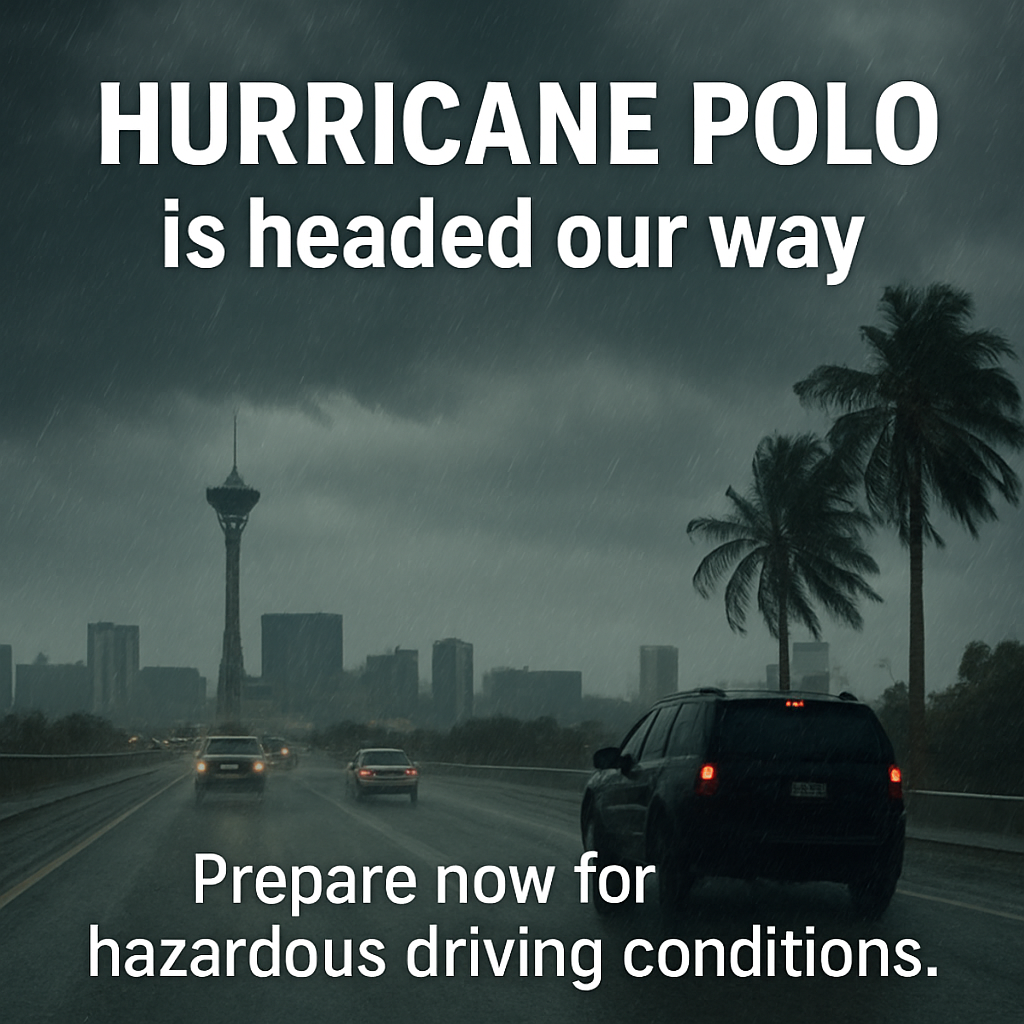
Hurricane Polo is headed our way, and Las Vegas Valley residents must prepare now for the hazardous driving conditions that will dominate Saturday through Monday. As a personal injury lawyer, I've witnessed firsthand how severe weather transforms ordinary commutes into dangerous situations that result in accidents. Wind and rain create unpredictable road hazards that demand your immediate attention and careful preparation. Taking action today could prevent you from becoming another weather-related accident statistic.
First and foremost, examine your vehicle's tires with meticulous care. Your tires represent the only contact between your vehicle and the road surface, making their condition absolutely critical during extreme weather. Worn tread significantly reduces your traction, particularly when wet conditions persist across the valley. Check your tire tread depth using the penny test: insert a penny into the tread with Lincoln's head upside down. If you see the top of Lincoln's head, your tread is insufficient and demands immediate replacement. Additionally, ensure your tires maintain proper inflation, as underinflated tires perform dangerously in windy conditions and create additional accident risks.
Master the Road: Essential Driving Techniques for Hazardous Weather
Subsequently, adjust your driving habits to accommodate the challenging conditions ahead. Increase your following distance between vehicles significantly—experts recommend maintaining at least eight to ten seconds of distance behind other cars during heavy rain. This extended buffer proves especially crucial because Las Vegas hasn't experienced substantial rainfall recently, leaving our roads slick with accumulated oil and debris. When water first contacts these oily surfaces, your tires lose critical traction, increasing your accident likelihood exponentially. Consequently, reduce your speed well below posted limits and drive with heightened awareness.
Furthermore, ensure your windshield wipers function optimally before Saturday arrives. Poor visibility contributes substantially to personal injury accidents during rainy conditions, and faulty wipers compound this danger. Replace worn wiper blades and fill your windshield washer fluid completely. Test your wipers at multiple speeds to confirm they clear your windshield effectively without streaking or skipping. These simple checks take minutes but provide invaluable protection during the storm's heaviest moments.
High-Risk Vehicles Demand Special Attention: Protecting Tractor Trailers, RVs, and Campers
Drivers operating tall vehicles—including tractor trailers, RVs, and campers—face heightened risks during Hurricane Polo's approach. These vehicles present larger surface areas for wind to strike, creating dangerous crosswind effects that can shift or overturn them. If you operate these vehicles, drive with extreme caution, reduce your speed significantly below normal rates, and remain especially vigilant when traveling through open stretches where wind gusts accelerate. Professional drivers should consider postponing non-essential trips until conditions improve substantially.
Moreover, passengers traveling in RVs or campers should secure all loose items and equipment before departing. Flying objects can damage your vehicle or harm other motorists, potentially creating serious accidents. Ensure your vehicle is mechanically sound, with special attention to your braking system and steering components. These systems face increased demand during severe weather driving, and any mechanical weakness could contribute to a personal injury incident.
Mountain Passes Require Extreme Caution: Plan Your Longer Distance Routes Carefully
If you're traveling beyond the valley to distant locations, understand that mountain passes present particular challenges during Hurricane Polo. Wind speeds increase dramatically at higher elevations, and visibility decreases when rain and wind combine on mountain roads. Avoid traveling these passes during peak storm times, if possible. If you must cross mountain passes, drive slowly and maintain complete focus on the road ahead.
Additionally, study your route before departing and identify alternative routes that avoid mountain passages if available. Check weather reports regularly and adjust your travel plans accordingly. Inform family members of your route and expected arrival time, creating an additional safety net.
Leave Early and Arrive Safe: The Ultimate Protection Strategy
Most importantly, leave early and allocate extra travel time for your journey. Rushing through severe weather creates poor decisions and increases your accident risk dramatically. By departing with substantial time to spare, you eliminate the pressure to speed or take risks. Safe driving practices during Hurricane Polo protect you, your passengers, and other motorists sharing our roads. Remember, arriving late remains infinitely preferable to not arriving at all.
If you are injured in a car accident during severe weather, call the personal injury lawyers at Cap & Kudler for a free consultation with an attorney.
This article is for informational purposes only and is not legal advice. Reading it does not create an attorney-client relationship.
Injured in an Accident? We Can Help.
Call Cap & Kudler for a free consultation. Our attorneys personally handle every case and fight to get you the compensation you deserve.
(702) 878-8778